Build your own pyramids, write your own hieroglyphs.
As pyramids permeate time as symbols. Hieroglyphs are symbols to explain the dimension of capacity to align with mentally.
In moment. As moment.
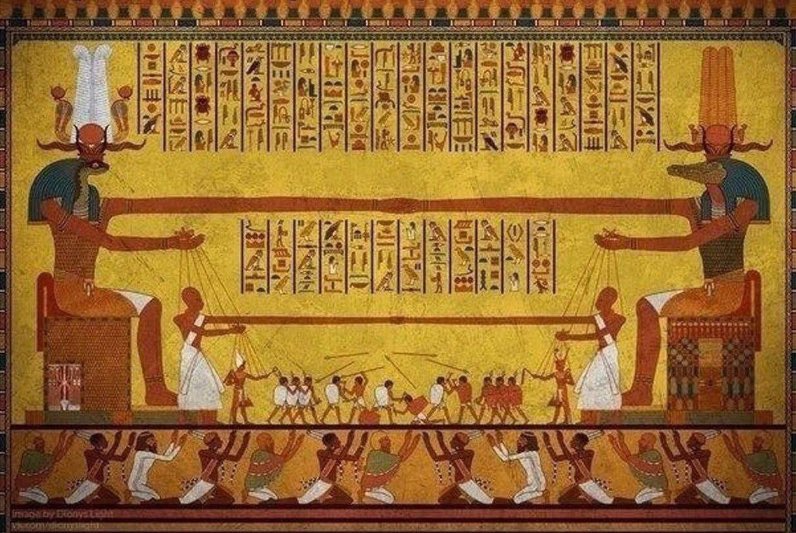
? - ?
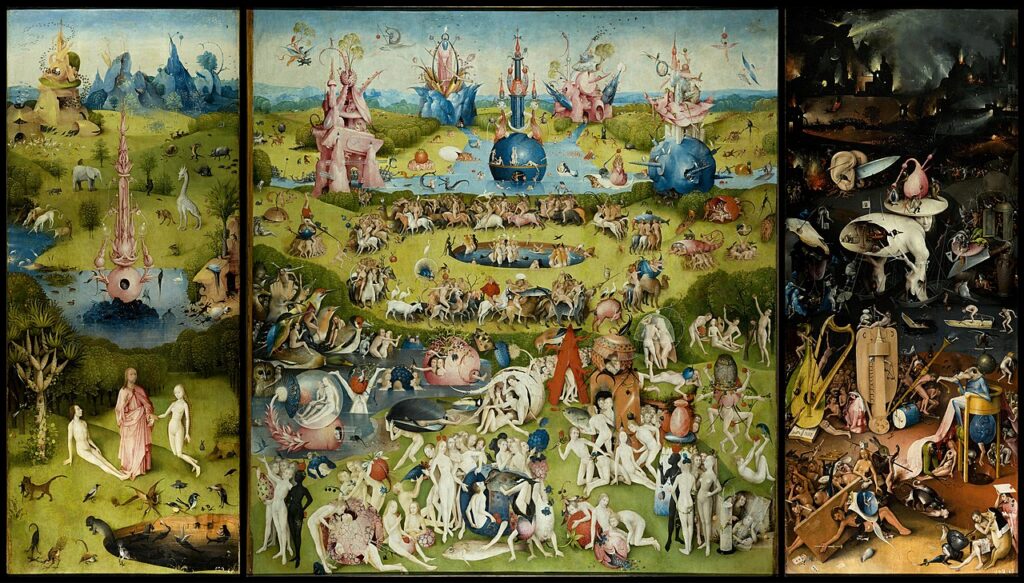
The Garden of Earthly Delights - Hieronymus Bosch
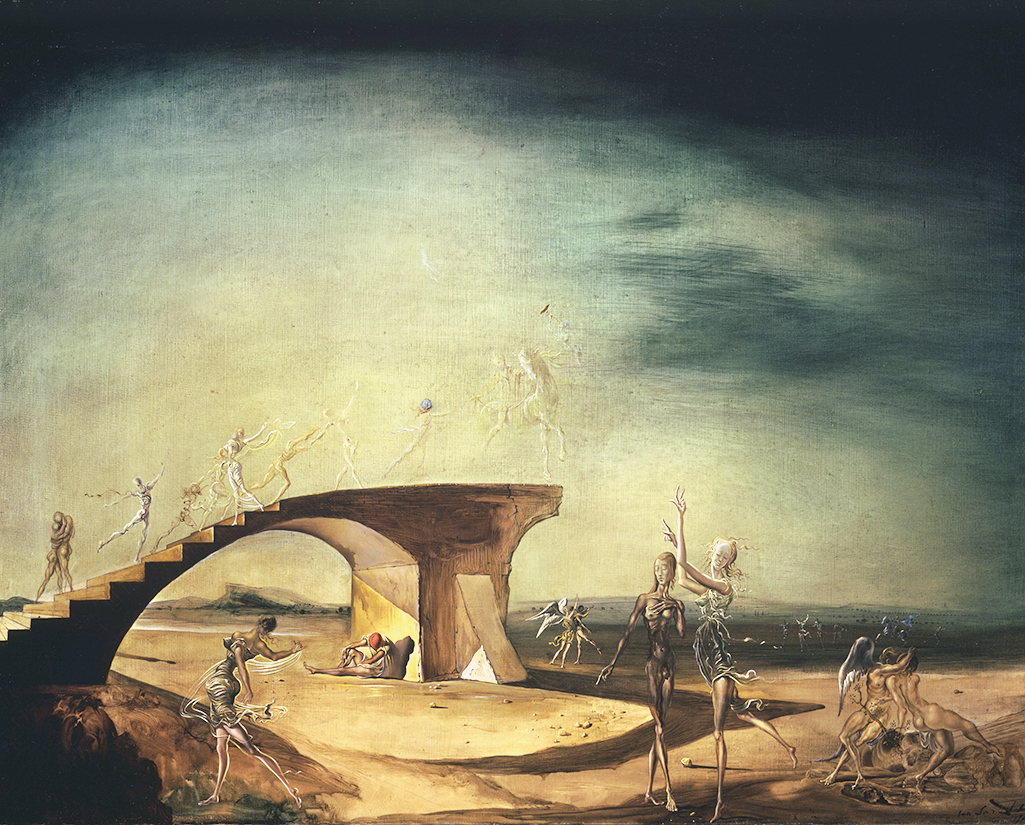
The Broken Bridge and the Dream - Salvador Dali, 1945
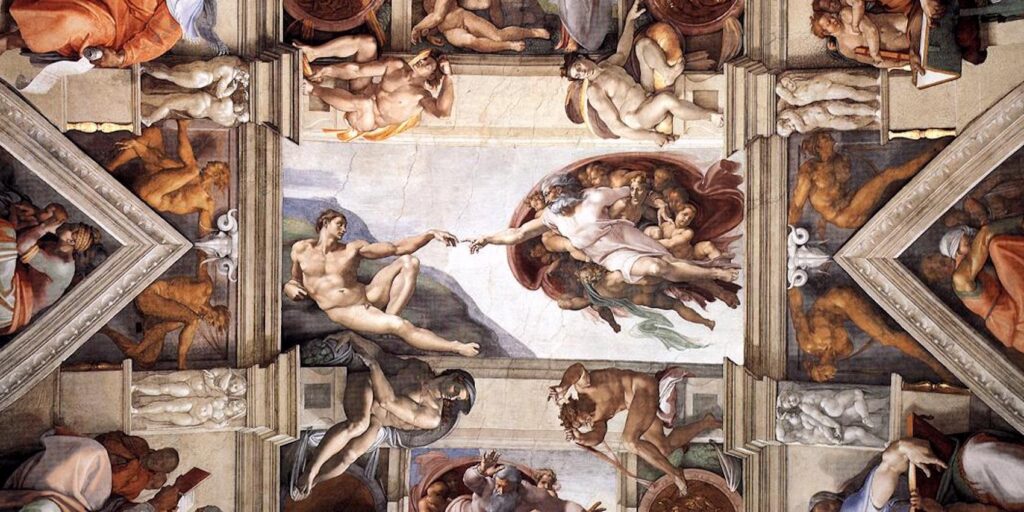
The Sistine Chapel - Michelangelo di Lodovico Buonarroti Simoni
I find it interesting to note God is within what looks like the human brain surrounded by others, man does not naturally extend his touch to reach God, it is mans choice.
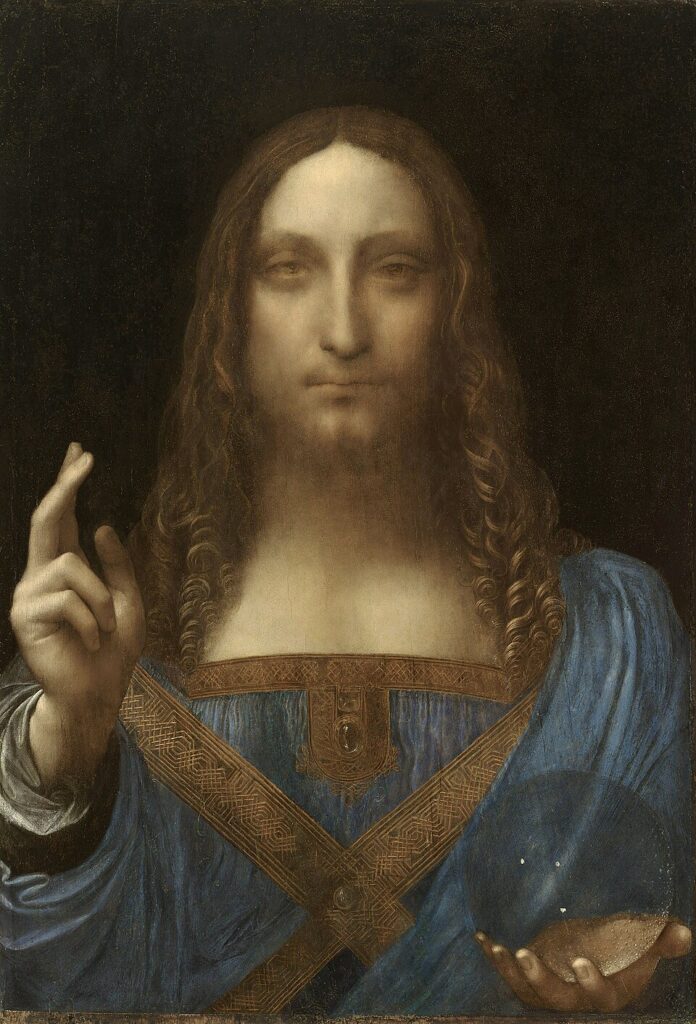
Salvator Mundi - Leonardo Da Vinci
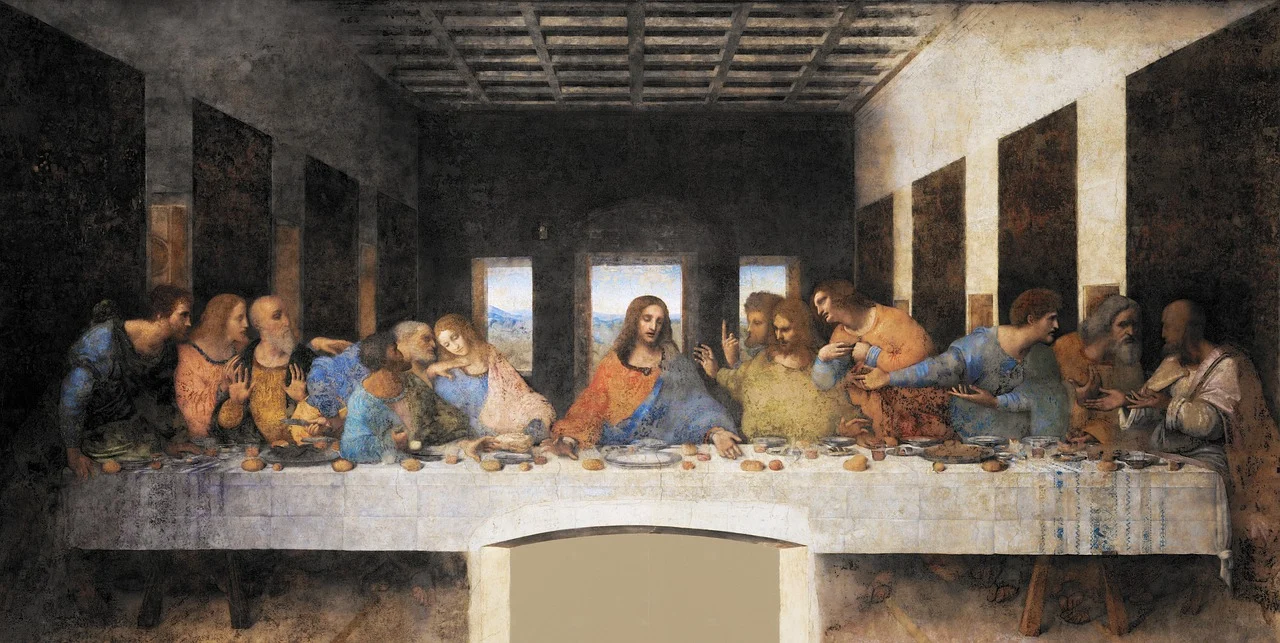
The Last Supper - Leonardo da Vinci
Above the figure:
Vitruvius, the architect, sets down in his work on architecture that the measures of man are distributed by nature in this way — that is, that 4 fingers make 1 palm, and 4 palms make 1 foot, 6 palms make a cubit, 4 cubits make a man, and 4 cubits make a pace, and 24 palms make a man; and these measures he used in his buildings. If you open your legs enough that you lower your head by 1/14 of your height, and open and raise your arms so that with your long fingers you touch the line of the top of the head, know that the center of the extremities of the spread-out limbs will be the navel. And the space that is found between the legs will be an equilateral triangle.
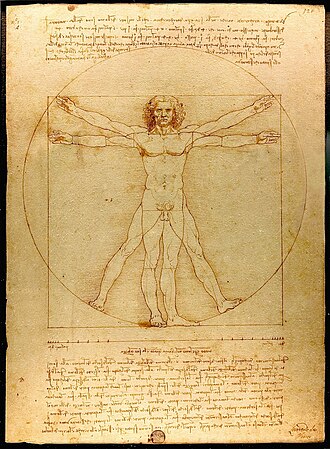
The Vitruvian Man - Leonardo da Vinci
Below the figure:
A man's outstretched arms span as much as his height. From the start of the hair to the end below the chin is one-tenth of the man's height. From below the chin to the top of the head is one-eighth of the man's height. From the top of the chest to the top of the head is one-sixth of the man. From the top of the chest to the start of the hair is one-seventh of the whole man. From the nipples to the top of the head is one-fourth of the man. The greatest breadth of the shoulders contains within itself one-fourth of the man. From the elbow to the tip of the hand is one-fourth of the man, and from that same elbow to the end of the shoulder is one-eighth of the man; the whole hand is one-tenth of the man. The virile member begins at the middle of the man. The foot is one-seventh of the man. From below the foot to below the knee is one-fourth of the man. From below the knee to the beginning of the member is one-fourth of the man. The parts that are found between the chin and the nose, and between the start of the hair and that of the eyebrows — each space, by itself, is equal to the ear, which is one-third of the face.
Nature has four known fundamental forces — strong, weak, electromagnetic, and gravity — and we’ve spent a century hunting the particles and principles that might reveal their unity. Einstein recast gravity as spacetime geometry; Noether uncovered the bond between continuous symmetry and conservation. Yet gravity remains outside the Standard Model’s quantum account of the other three forces. Kaluza and Klein made a founding bet in the 1920s: curl an extra spatial dimension into a tiny circle, and electromagnetism emerges alongside gravity from the same higher-dimensional geometry. String theory and eleven-dimensional M-theory raise the stakes: the shape, topology, and singularities of compact dimensions, together with their fields, fluxes, and branes, can give rise to particles, gauge symmetries, and couplings that recover important features of the Standard Model — with gravity present from the start. That makes the next question compelling: could the same compactification, through the particles and early-universe dynamics it permits, account for dark matter and the imbalance that allowed matter to outlast antimatter? The hunt would no longer be only for missing particles, but for the structure that explains their properties — with experiments deciding whether the mathematics describes nature. The landscape of possible compactifications remains vast, and whether any describes our universe is unresolved. But the wager is immense: that the matter we see, the matter we cannot see, and the forces governing both are not disconnected ingredients, but different expressions of a common structure.